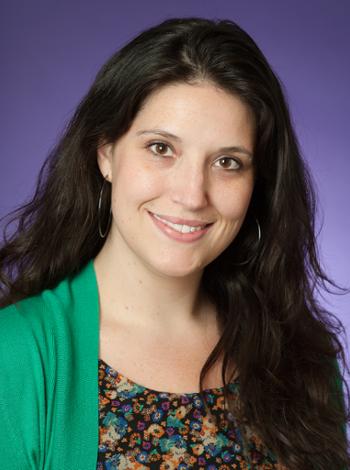
Marlo Jeffries, Ph.D.
m.jeffries@tcu.edu817-257-6171WIN 506
Program Affiliations
Education
BS, Biology, University of Nebraska at Omaha, 2002
MS, Biology, University of Nebraska at Omaha, 2005
PhD, Environmental Toxicology, University of Nebraska Medical Center, 2010
Areas of Focus
- Aquatic Toxicology
- Reproductive Endocrine Disruption
- Thyroid Disruption
- Immunotoxicology
- Development of Alternative Toxicity Testing Methods
Courses
- Mammalian Physiology (Biol 40403)
- Vertebrate Endocrinology (Biol 40473)
- Principles of Toxicology (Biol 40453)
My research program centers on elucidating the effects of contaminants of emerging concern on various physiological processes, especially those related to reproduction, development, and immunity. My lab is currently pursing three major lines of research: 1) Effects-directed analysis to screen for and prioritize chemicals of emerging concern in urban and agricultural watersheds, 2) Elucidation of the impacts of exposures to endocrine disrupting compounds on thyroid hormone signaling, reproductive endocrine function, behavior, and immunity in fish and amphibians, and 3) Development of alternative methods for routine toxicity assessments and endocrine disruption screening. Graduate and undergraduate students working in my laboratory employ a wide variety of techniques, ranging from molecular and biochemical approaches (e.g., targeted gene expression analysis, transcriptomics, ELISAs, etc.) to whole-organism assays (e.g., pathogen resistance trials, behavioral assessments, etc.) to address specific questions within each of these research areas. Students interested in pursuing research with my team can learn more at http://www.tcujeffrieslab.com/.
-
Allen, D. S., Kolok, A. S., Snow, D. D., Staybaldiyev, B., Uralbekov, B., Nystrom, G. S., Thornton Hampton, L. M., Bartelt-Hunt, S., and Sellin Jeffries, M. K. (2023). Predicted aquatic and human health risks associated with the presence of metals in the Syr Darya and Shardara Reservoir, Kazakhstan. Science of the Total Environment, 859:159827. -
Thornton Hampton, L. M., Finch, M. G., Martyniuk, C. J., Venables, B. J., and Sellin Jeffries, M. K. (2021). Early life stage thyroid hormone disruption causes long-term impacts on immune cell function and transcriptional responses to pathogen in the fathead minnow (Pimephales promelas). Scientific Reports, 11:14496. -
Krzykwa, J. C., King, S. M., and Sellin Jeffries, M. K. (2021). Investigating the predictive power of three potential sublethal endpoints for the fish embryo toxicity test: snout-vent length, eye size and pericardial edema. Environmental Science and Technology, 55:6907-6916. -
Krzykwa, J. C., and Sellin Jeffries, M. K. (2020). Development of a larval fathead minnow optomotor response assay for assessing visual function. MethodX, 7:100971. -
Snow, D. D., Chakraborty, P., Uralbekov, B., Satybaldiev, B., Sallach, B., Thornton, L., Jeffries, M., Kolok, A., and Bartelt-Hunt, S. (2020). Legacy and current pesticide residues in Syr Darya, Kazakhstan: Contamination status, seasonal variation and preliminary ecological risk assessment. Water Research, 184:116141. -
Thornton Hamptom, L. M., Sellin Jeffries, M. K., and Venables, B. J. (2020). A practical guide for assessing respiratory burst and phagocytic cell activity in the fathead minnow, an emerging model for immunotoxicity. MethodX, 7:100992. -
Krzykwa, J. C., and Sellin Jeffries, M. K. (2020). Comparison of behavioral assays for assessing toxicant-induced alterations in neurological function in larval fathead minnows. Chemosphere, 257:126825. -
Thornton Hampton, L. M., Martyniuk, C. J., Venables, B. J., and Sellin Jeffries, M. K. (2020). Advancing the fathead minnow (Pimephales promelas) as a model for immunotoxicity testing: Characterization of the renal transcriptome following Yersinia ruckeri infection. Fish and Shellfish Immunology, 103:472-480. -
Roush, K. S., and Sellin Jeffries, M. K. (2019). Sexual maturity status as a confounding variable in fish-based screening assays for the detection of anti-estrogens and non-aromatizable androgens. Environmental Toxicology and Chemistry, 38:603-615. -
Krzykwa, J. C., Saeid, A., and Sellin Jeffries, M. K. (2019). Identifying sublethal endpoints for evaluating neurotoxic compounds utilizing the fish embryo toxicity test. Ecotoxicology and Environmental Safety, 170:521-529. -
Thornton, L. M., Path, E. M., Nystrom, G. S., Venables, B. J., and Sellin Jeffries, M. K. (2018). Embryo-larval BDE-47 exposure causes decreased pathogen resistance in adult male fathead minnows (Pimephales promelas). Fish and Shellfish Immunology, 80:80-87. -
Krzykwa, J. C., Olivas, A., and Sellin Jeffries, M. K. (2018). Development of cardiovascular and neurodevelopmental metrics as sublethal endpoints for the fish embryo toxicity test. Environmental Toxicology and Chemistry, 37:2530-2541. -
Roush, K. S., Krzykwa, J. C., Malmquist, J. A., Stephens, D. A., and Sellin Jeffries, M. K. (2018). Enhancing the fathead minnow fish embryo toxicity test: Optimizing embryo production and assessing the utility of additional test endpoints. Ecotoxicology and Environmental Safety, 153:45-53. -
Norberg-King, T. J., Embry, M. R., Belanger, S. E., Braunbeck, T., Butler, J. D., Dorn, P. B., Farr, B., Guiney, P. D., Hughes, S. A., Jeffries, M., et al. (2018). An international perspective on the tools and concepts for effluent toxicity assessments in the context of animal alternatives. Environmental Toxicology and Chemistry, 37:2745-2757. -
Yost, A. Y., Thornton, L. M., Venables, B. J., and Sellin Jeffries, M. K. (2016). Dietary exposure to polybrominated diphenyl ether 47 (BDE-47) inhibits development and alters thyroid hormone-related gene expression in the brain of Xenopus laevis tadpoles. Environmental Toxicology and Pharmacology, 48:237-244.
Burchfiel E, Allen D, Wise C, Aldrete Z, Solomons K, Jeffries MK. 2023. Fluorescing fish: Using transgenic medaka to screen for environmental estrogens. South Central Chapter of the Society of Environmental Toxicology and Chemistry Annual Meeting, Denton, TX.
Solomons K, Allen D, Jeffries MK. 2023. Innovations in marine toxicity testing: Fish embryo and mysid tests as replacements for larval tests. South Central Chapter of the Society of Environmental Toxicology and Chemistry Annual Meeting, Denton, TX.
Jeffries MK, Doyle K, Horton K. 2022. Development of a new infection model for fathead minnows, an emerging immunotoxicity model organism. Society of Environmental Toxicology and Chemistry 43rd North America Annual Meeting, Pittsburgh, PA.
Allen DS, Wiencek M, Kelly M, Jeffries MK. 2022. Can tests with fish embryos or shrimp replace larval fish tests? – An initial evaluation of marine alternatives. Society of Environmental Toxicology and Chemistry 43rd North America Annual Meeting, Pittsburgh, PA.
- Editor, Environmental Toxicology and Chemistry
- Associate Editor, Archives of Environmental Contamination and Toxicology
- Review Editor, Frontiers in Immunology
- Co-chair, Society of Environmental Toxicology and Chemistry Immunotoxicity Global Interest Group
- Co-chair, 2024 Socieity of Environmental Toxicology and Chemistry North America Annual Meeting
- Member, Health and Environmental Sciences Institute Next Generation Ecological Risk Assessment Committee
Exceptional reviewer (top 15 of nearly 850 reviewers) for Environmental Toxicology and Chemistry in 2018, 2020 and 2021
TCU Wassenich Award for Mentoring Nominee, 2018.
Nomination for Environmental Toxicology and Chemistry Best Paper of 2015; recognition appears in Environmental Toxicology and Chemistry, 35: 1605–1606.
Grants
Graduate Women in Science National Fellowship Program. 2022-2023. Identifying chemical hazards in aquatic systems: Validation of a small fish model to identify immunotoxic chemicals. $10,000. Awarded to Graduate Student, Rashidat Jimoh.
American Association of Laboratory Animal Sciences – Grants for Laboratory Animal Science (GLAS) program. 2021-2022. Moving Marine Fish Toxicity Tests Towards the 3Rs. $10,164. Marlo Jeffries (PI) and Dalton Allen (PhD student co-PI).
Society of Environmental Toxicology and Chemistry/ Procter & Gamble Fellowship for Research in Environmental Science. 2018-2019. Advancing animal alternatives in toxicity testing: The use of developmental abnormalities in fish embryos to predict chronic toxicity and adverse outcomes. $15,000. Awarded to Graduate Student, Julie Krzykwa.
American Association of Laboratory Animal Sciences – Grants for Laboratory Animal Science (GLAS) program. 2015-2016. Towards the 3R’s in fish toxicity testing. $27,192. Marlo Jeffries.
National Science Foundation – Catalyzing New International Collaborations (CNIC) Program. 2014-2015. Catalyzing New International Collaborations: US-Kazakhstan workshop and pilot study- Pesticide occurrence and ecological effects in the Syr Darya River Basin. $49,751. Dan Snow, Alan Kolok, Shannon Bartelt-Hunt and Marlo Jeffries.
Last Updated: August 10, 2026